What Deadpan Comedy Is Really Doing
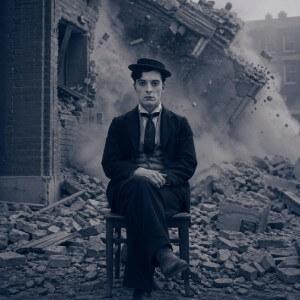
Most of the work is done in restraint. Deadpan comedy is a performance that depends on the gap present in the disparity of the content and the performance. It means, an absurd or biting remark was said with the histrionic or delivery such that it refuses to be acknowledged as absurd by the voice. The face is solemn and speaking flatly and almost in monotone. People left to recognize the string of us all.
Something in between, that is the fundamental begetter of sarcasm, steals its own insincerity, almost self-aware. Slapstick yawns wide in grotesque exaggeration. Parody, if it knows any better, is outing the target. Deadpan does none of these things. It refuses to "show the red flag" completely, growing colder, meaner, and more unsettling by dint of the gaps from the comic good time.
Comic delivery turns a deadpan joke into a poor one. Keaton expressing calm while others panic does not become funny because a building collapses around him. The understatement suggests that he notices something somewhere and registers the fact of the event, but does not judge it. Furthermore, Keaton's unflappable cool expresses something like a sense of incredulity.
Why Straight-Faced Delivery Makes Things Funnier
There's a particular pleasure in realizing you've been had. Deadpan comedy exploits exactly that moment – the performer says something absurd with complete sincerity, and the audience is left to figure out whether they heard it right. That gap between delivery and meaning is where the laugh actually lives.
Psychologists call this incongruity. The brain registers a mismatch between what's expected and what arrives. When a comedian signals a joke through a smirk or a pause, they resolve that mismatch for you. Deadpan refuses to. The joke stays open, and the audience has to close it themselves. That interpretive effort generates a small shock of recognition, and recognition feels good.
Seriousness, counterintuitively, amplifies absurdity rather than neutralizing it. Steven Wright's flat monotone makes his observations feel like genuine complaints, which is precisely why they're funny. The straight face frames the ridiculous as reasonable, and the contrast does the comic work that a punchline delivery would undercut.
From Buster Keaton to Memes, Deadpan Keeps Adapting
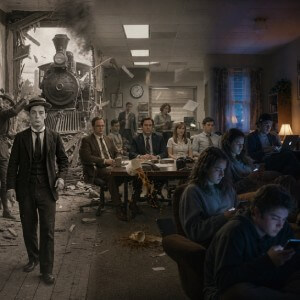
Buster Keaton built an entire career on refusal. While his contemporaries mugged and gurned for laughs, Keaton let chaos erupt around him and simply watched. In The General (1926), trains crash and armies collide while his face registers almost nothing. That impassivity wasn't emotional absence – it was control, a kind of comic dignity that made the absurdity around him feel more extreme by contrast.
Television found its own version of this in The Office, where the documentary format depends on deadpan to function. Characters deliver outrageous statements in the flat cadence of a staff meeting, and the joke lives in the gap between what's said and how it's said.
Internet humor has inherited exactly this structure. A widely circulated meme format presents a genuinely unhinged premise in the neutral typography of a government notice. The straight-faced delivery signals something – irony, intelligence, detachment – without spelling any of it out.
Deadpan Humor Trusts the Audience to Catch Up
There is an unwritten carriage in straight-faced comedy. The performer won't so much as insert a hint of something funny having taken place -the cue has to come from the audience. It is within this sliver of silence and confusion that the laughter lies. When Buster Keaton sauntered past the world falling apart, keeping his face deadpan, or when Steven Wright made his existential/ironic jokes (delivered as if his coffee was just poured), the joke itself would get completed in the mind of a listener. The deadpan works so well, because it makes the audience a part of it, asking them to perceive the disconnect between the words said and how they are said. That very disconnect is the humor of the joke. The straight face is not about the lack of humor, but about its facilitation. By dismissing out of its vocabulary the extra text that acknowledges the internal joke, the straight face keeps the audience expecting more - and later, provides extra reward if they pay enough attention.
With the kind help from