Before the First Joke, the Room Is Already Part of the Show
Made upon visiting a comedy club the first time, most people wouldn't laugh out loud to the anticipation of sitting down and hear the funnies. What the room does perform is beyond any expectation coming from any puny spectator.

Arrival, Check-In, and First Impressions
Check-in is usually quick - a name at the door, maybe a ticket scan, and you're in. Some clubs charge a drink minimum, typically two drinks per person, which is worth knowing ahead of time so the price on your receipt doesn't catch you off guard. Grab your drink early. Once the show starts, servers move carefully and quietly, and flagging one down mid-set is the kind of thing that makes both the comic and your neighbors quietly resent you.
What often goes unnoticed is how quickly people begin reading the room. You clock the layout, the spacing between tables, the size of the stage, and even the distance from your seat to the microphone. All of that subtly shapes your expectations. A tightly packed room signals intimacy. A larger venue hints at a more structured experience. These cues matter more than most first-timers expect.
Where You Sit Shapes Your Experience
Seating position has much more influence than is commonly thought. The front row gets all the interaction, which can be nerve-wracking or embarrassing, depending on the performer. Fans who just want to watch should stay in the middle, in order to avoid any embarrassment. A lot of rooms call for bravery; take for instance, being in the dreaded bar back room with the folding chairs, or in a converted warehouse hosting its DIY showcase in virtually the city where no remedy awaits.
Perspective also plays into the experience. Being close up implies every pause, every facial expression, every moment of improv. Further back is great for observing audience reaction, possibly as entertaining as the show itself. Neither is better, but each is a different version of the same show.
The Energy Shift Before the Show Begins
The lighting drops, the background music fades, and something shifts in the crowd. That low-level anticipatory buzz, people leaning slightly forward, conversations dropping to murmurs, is the room calibrating itself. A packed house on a Saturday night feels completely different from a Tuesday showcase with forty people. The energy the audience carries in shapes what happens on stage. Comics feel a quiet room immediately.
There is also a subtle social agreement forming in those final minutes. People stop treating the space like a bar and start treating it like a shared experience. That shift is what allows the show to work. Without it, the performance would struggle to land.
House Rules and Unspoken Expectations
Silence your phone before you sit down, not when the host walks out. Different venue types set different expectations too. A comedy club has a tighter, more structured feel. A bar room show is looser, sometimes noisier. A small theater tends toward attentive silence. Knowing which you're walking into helps you settle in faster and enjoy the show on its own terms.
There are also unwritten norms that regular attendees follow without thinking. Conversations stop once the show starts. Reactions are shared, not exaggerated. Respect for the performer and the audience becomes part of the experience itself. Picking up on these cues quickly helps you feel like part of the room rather than separate from it.
The Emcee Sets the Tone and Teaches the Room How to Listen
Before the first act of the feature comic goes on stage all the way; the shape of most of the evening has already been decided. This is the job of the emcee, and perhaps very few first-time attendees see that.

Reading the Crowd in Real Time
A good host isn't warming up the room in some vague, cheerful sense. They're doing specific work. They read the crowd fast, figure out whether the audience is loose and chatty or stiff and uncertain, and then adjust their material accordingly. If a table near the front is already three drinks in and rowdy, a sharp emcee acknowledges them early, gets a quick laugh out of it, and folds them into the show rather than letting them become a distraction. That's crowd work, and it's a real skill.
This ability to read subtle signals sets the tone for everything that follows. A well-handled opening can relax a tense audience or rein in an overly loud one. That balance is what allows the rest of the lineup to perform at their best.
Setting Expectations Without Breaking the Flow
Let's talk about the practical stuff, too. The host goes ahead and explains the rules, usually without making it sound like a safety announcement. Do not heckle, please leave your phone off if you can, and do tip your server. The best way to accomplish this is in about thirty seconds with a punchline. They retain that information better than you would think and create a sort of social contract for the evening.
At that point, enforcement comes very seldom. It is often unnecessary. After you have talked about it, the audience places limitations on itself. That shared understanding is the glue holding the event together.
Handling Missed Jokes and Resetting the Room
When a joke lands flat, the emcee absorbs it and moves on without making the audience feel awkward about not laughing. That recovery ability matters more than most people realize. A host who freezes or over-explains a missed joke drains the room's confidence. A host who brushes it off and keeps moving signals that this is a safe space to experience something unpredictable.
That confidence is contagious. It reassures the audience that they can react naturally without worrying about getting it “right.” In live comedy, that freedom is essential.
Transitions Between Performers
Between comics, the emcee resets the energy. They give the previous performer a proper send-off, buy the next act a few seconds of anticipation, and re-establish the rhythm before stepping aside. Think of it like a DJ reading a dancefloor between tracks.
By the time the first featured act walks out, the audience already knows how to behave at a live comedy show. That's not accidental. The emcee taught them.
Audience Interaction, Pacing, and the Unwritten Rules of the Room
The media - newspapers, TV networks, and bloggers - were to take their cues on the World Wide Web. It's a famous axiom for any digital news tycoon, if not infallible, that wisdom will decide that online media success is for them a watershed of sorts.
Understanding Silence and Timing
That silence isn't failure. Often, a comic is building toward something, stacking setup on setup before the punchline pays everything off. If you're new to live stand-up, resist the urge to read quiet moments as awkward. They're usually intentional.
Timing is one of the least visible but most important skills in comedy. Knowing when to pause, when to push forward, and when to let a moment breathe can completely change how a joke lands.
Different Pacing Styles Across Performers
Pacing varies wildly between performers. Some comics fire jokes rapid-fire, barely giving you room to breathe. Others slow things down, letting a story unfold before the payoff. Neither approach is better. The contrast between acts is part of what makes a full show interesting to sit through.
As an audience member, adjusting to these shifts becomes part of the experience. It keeps the night from feeling repetitive.
How to Handle Being Part of the Act
Crowd work is a real part of the experience. A comic might ask where you're from, what you do for work, or riff on something you're wearing. Most of the time it's playful, and going along with it makes the moment land better for everyone. If you get singled out, relax. You're not being mocked - you're being used as material, which is different. Short, honest answers work better than trying to be funny back.
The key is to participate without trying to take control of the moment. That balance keeps the interaction enjoyable rather than disruptive.
Multiple Performers Build the Night One Set at a Time
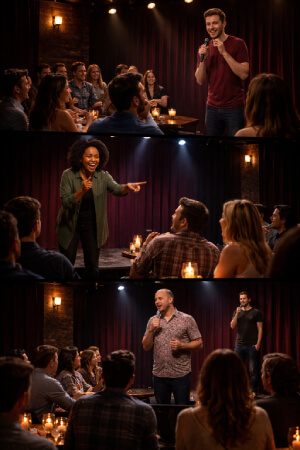
Once the mic is passed to the first comic, the show picks up, and that's when you truly feel the rhythm. Most club shows have anywhere from three to five acts, and the order seems to matter a whole lot more than one would expect.
Early Acts and Finding the Room
Early slots go to less experienced performers working shorter sets, usually five to ten minutes. They're finding their footing, testing material, warming up a crowd that's still settling in.
These opening moments can feel slightly uneven, but they serve an important purpose. They ease the audience into the pace of the night and begin building the collective rhythm that later performers rely on.
Different Styles and Delivery Approaches
Each comic brings a completely different energy. One might work slow and dry, building a long story toward a single devastating punchline. The next could be fast, punchy, throwing out rapid jokes and then adding tags - those quick follow-up lines that squeeze a second or third laugh from the same setup. Neither approach is better. They just hit differently depending on the room.
Seeing these contrasts back-to-back highlights how flexible stand-up can be as a format. It is not one style repeated, but a sequence of different voices interpreting the same space.
Crowd Work and Spontaneity
Some performers lean on crowd work, pulling audience members into the act directly. A comic might ask where you're from, then spend three minutes riffing on your answer. It can feel spontaneous, and sometimes it is. Other times it's a practiced routine dressed up as improvisation. Either way, it tends to wake people up.
That unpredictability is part of the appeal. Even if you attend multiple shows at the same venue, these interactions ensure that no two nights feel identical.
When a Set Doesn’t Land
Not every set lands. Bombing happens, even at good shows. A comic loses the room, the laughs thin out, and there's an uncomfortable stretch of silence. That's live comedy. Sitting through a rough set is part of the experience, and the audience that stays warm and generous makes a real difference to whoever's on stage.
These moments also highlight the risk involved in performing live. They make the successful sets feel sharper and more earned by comparison.
The Headliner Brings It Home, but the Night Stays Unpredictable
Every stand-up night embodies the same essential structure: the emcee opens things up, a series of middle acts maintain the vibe, and the headliner closes the show with a longer planned set. Quite predictable! But always to be filled with unpredictability. A crowd on a Tuesday in March will behave nothing like they would on a Saturday in October, and just one joke interrupted by a single heckler might send everyone spinning on an altogether unintended course. This is not a flaw of the form; this is the form. Stand-up comedy only happens when one lurches away from illusion or illusionistic verisimilitude and into what always reminds us instinctual of what we can't quite outrun. Where performance and room chemistry collide with whatever the audience is bringing from outside into the night, we have the mojo that can fuel a thrill ere it slips away.
With the kind help from